3D Printing Technology & Model Railroading
By Frank Termini, TCA #92-35802 Fall 2026 e*Train
Finding spare parts for your trains or accessories can sometimes be challenging. The internet is probably the best resource for parts if a local hobby store cannot service your needs and train shows are not frequent in your area. Sometimes, though, you can make your own parts. I found this to be the case by utilizing 3D printing technology. Now, this option will not appeal to every “collector”, but it might to some “operators”.
I retired a few years ago after a career in Information Technology. Finding solutions to problems must be a gene I carry because even after my professional days have ended, the need to find a workable solution has not.
I collect and operate mostly Lionel trains, but anything that runs on three rails has a place on one of my layouts. If every train were operating at the same time, I would have over 30 engines and/or motorized units active. So, Occasional challenges do arise. The next few paragraphs and photos are designed to show what types of parts I produced over the last few years and how these parts filled a need. Hopefully, someone will read this and see it as an option they might pursue.
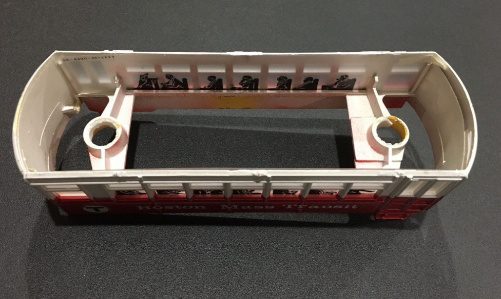
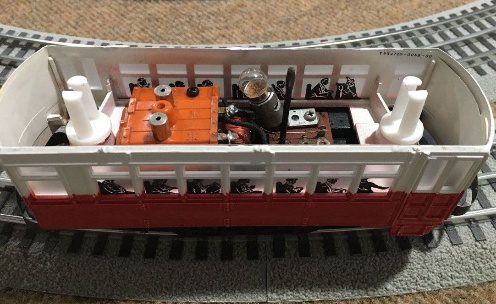
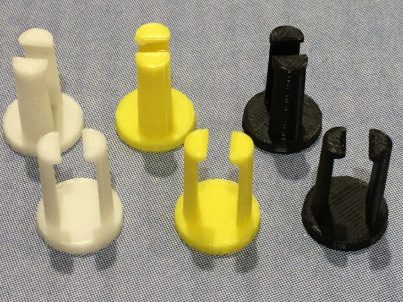
One of my first projects involved a Lionel #60 Trolley I purchased on EBAY. The EBAY listing only showed the outside of the trolley, not the interior. The listing also said the trolley “ran”. When I received the item, the roof was not attached to the body. The trolley did run, but the roof would not stay on. The roof locks had been broken off. With a little design work and careful measuring, I was able to create my own roof locks on my 3D printer and glue them onto the frame where they should have been. The roof never came off again.
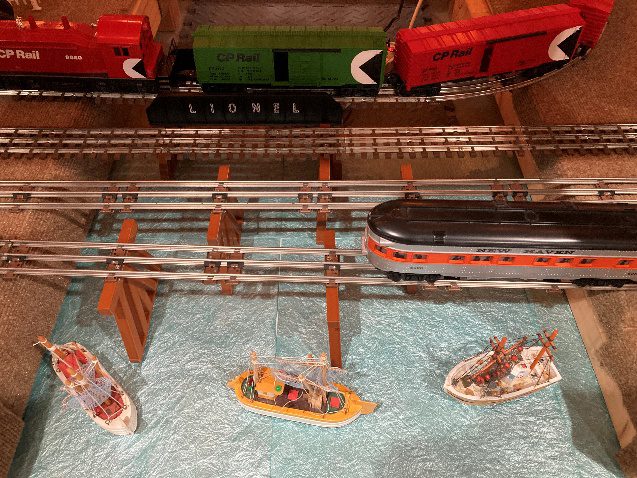
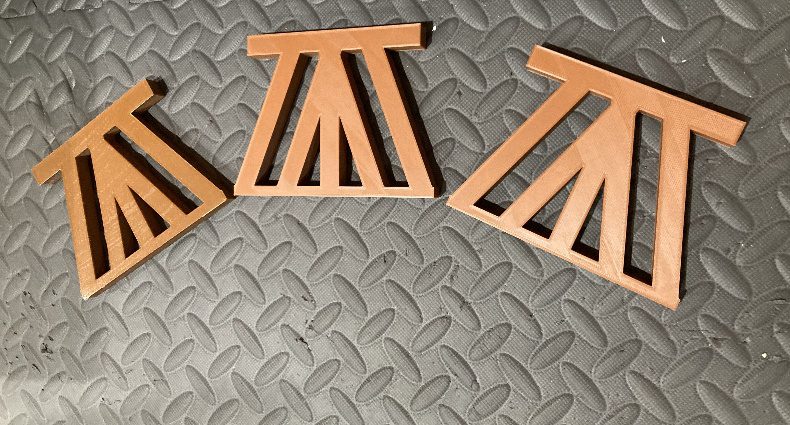
I had a section of my layout that ran over an empty area. With a few 3D-printed trestles, some paper sheets glued to a poster board simulating water, and a few boats, I transformed that empty area into a more interesting look.
I came across a #435 pre-war power station missing the chimney. I could not leave it for what it was being sold for. I got it home, and a couple of days later, I had a 3D-printed chimney that fit it.
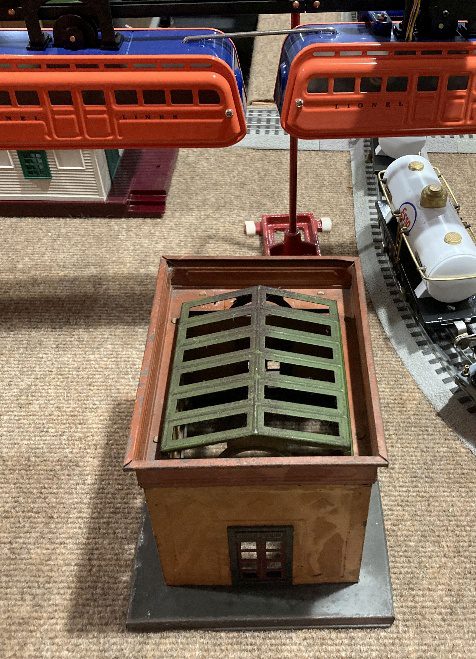
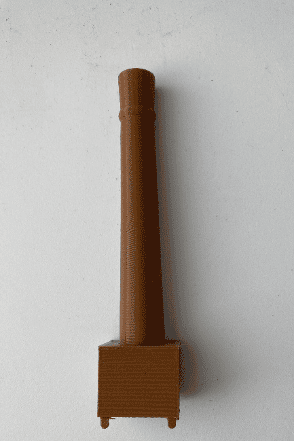
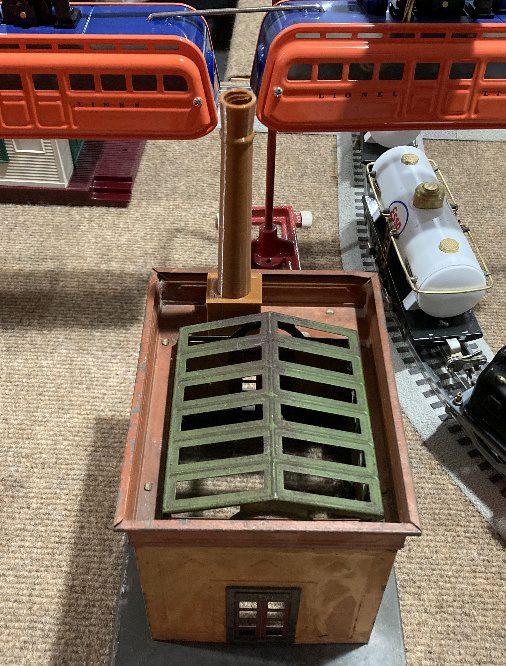
I had a friend who collected toy trains, soldiers, tanks, and planes, among other things. Sadly, he passed away. He had two of the large Lionel #840 power stations. One was in the original Lionel cream, orange, and olive colors, which the family still owns. The other was painted in battleship grey and red. It was used as the backdrop for his columns of marching soldiers. It had the smokestacks but was missing the water tower on the roof and the stairs that fit the olive base. It was put up for sale, but did not sell. I eventually purchased it. I immediately went to work designing a look-alike water tower and the missing stairs.
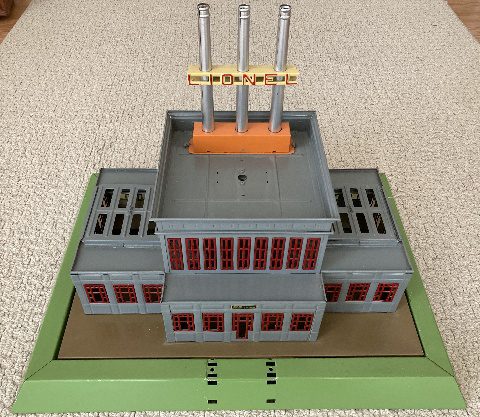
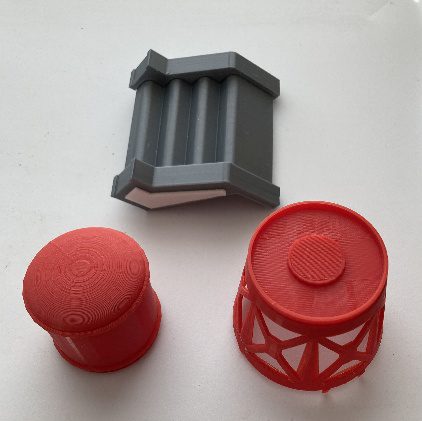
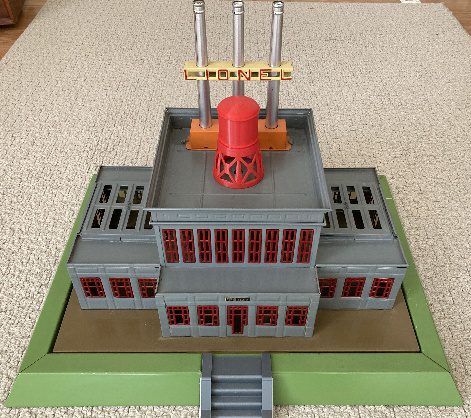
For some reason, I am attracted to the Lionel #189 Villas. I purchased one just to have it. I did not attempt to restore or repaint it. I just wanted it.
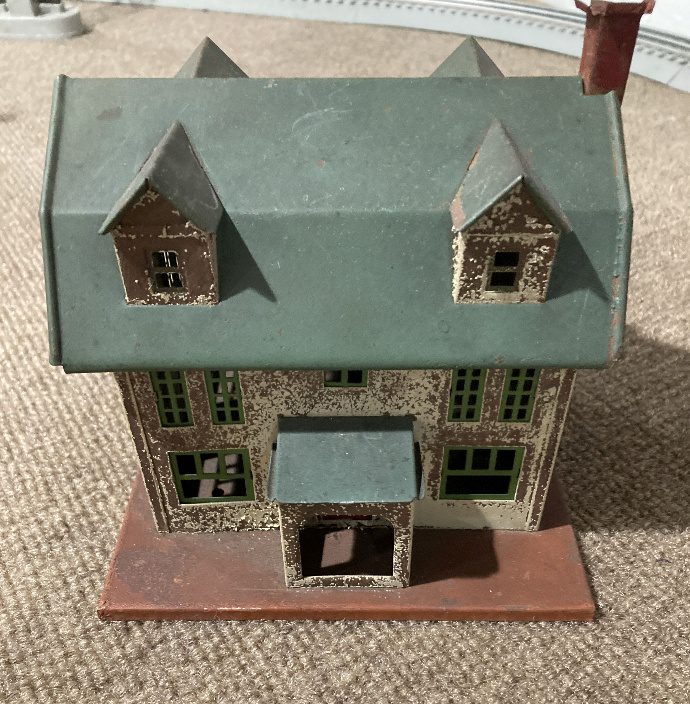
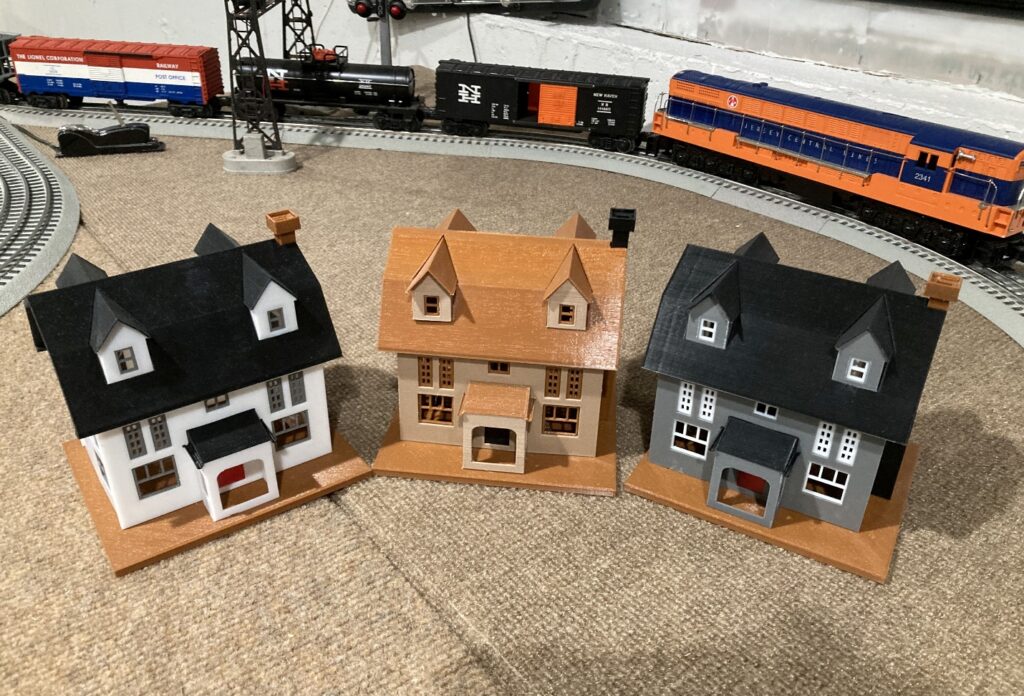
Then last winter, while looking for a project, I thought I might try to 3D Print one of the Villas; after all, Plasticville created some simply constructed buildings. Could it be done? How would they look? I made one. I was so surprised by how it came out, I made two more.
Just for fun, one day I wanted to see if I could produce Lego-compatible train tracks for my nephew. As it turns out, it had been done before and was easily found on the internet. That put an end to that project quickly. But just for fun, I decided to try to produce some Lego-compatible pieces of my own. As it turned out, it was not so difficult. I made a bunch of them.
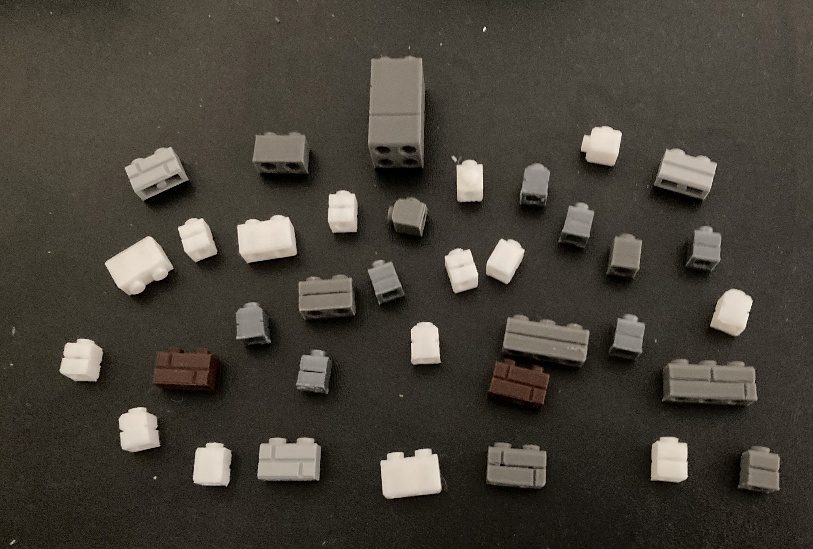
Now I have driven Ford Mustangs since 1975. One day, I thought it would be nice to have a Ford factory on my layout. And so another project was born. Over 1000 lego-like bricks later, a Ford Factory appeared on my layout to go along with my Lionel Ford train items.
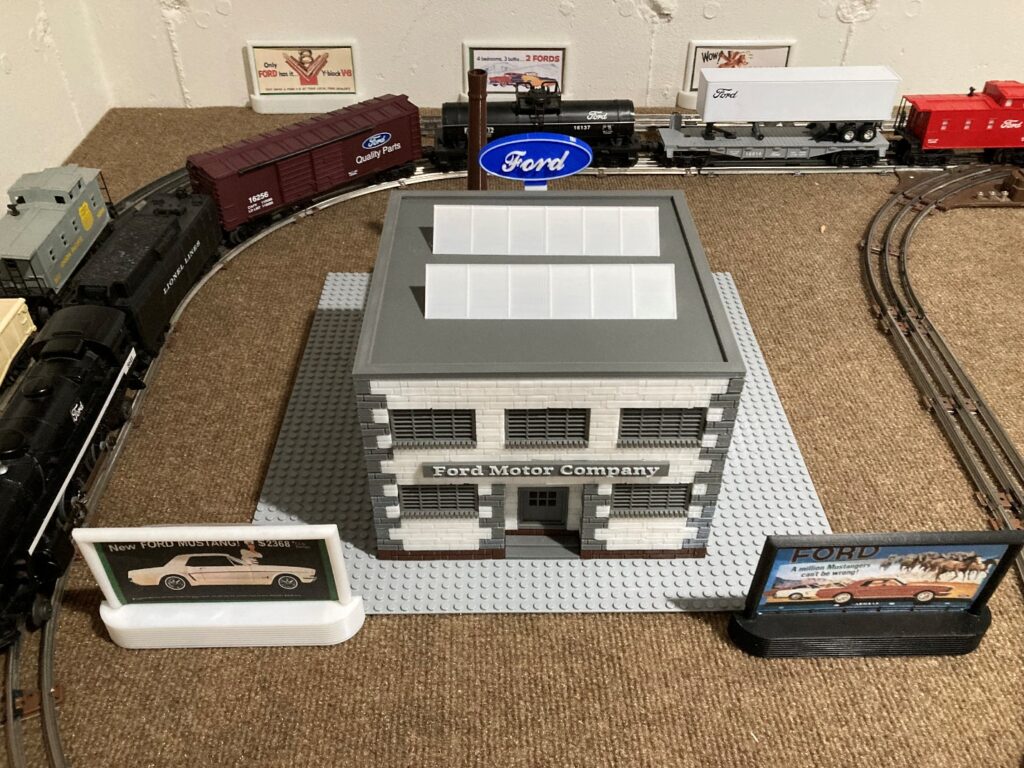
Note: The plastic billboards in the picture above were all 3D printed. The cardboard inserts are not Lionel, but created from some Ford advertisements.
One last “not so important” project.
I converted much of my layout to FasTrack. As a result, I had lots of tubular track laying around. I never liked the look of the tubular stuff, mostly because of the third rail, but also because the lack of track ties. Well, there was nothing I could do about the 3 rails, but certainly I could add 3D printed track ties to make them look a little better.
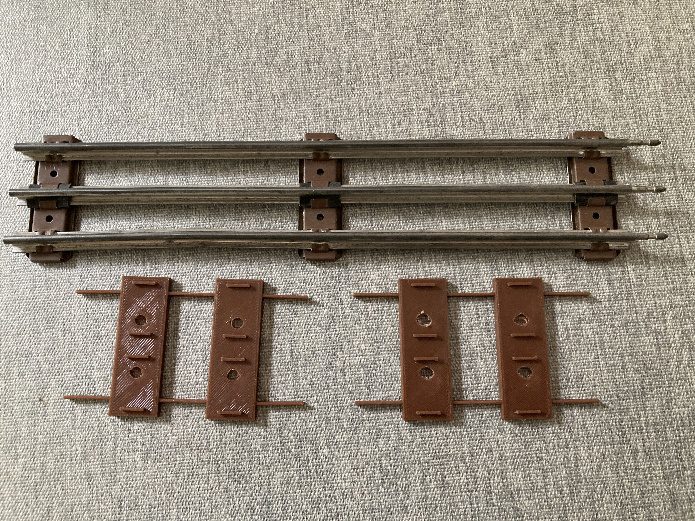
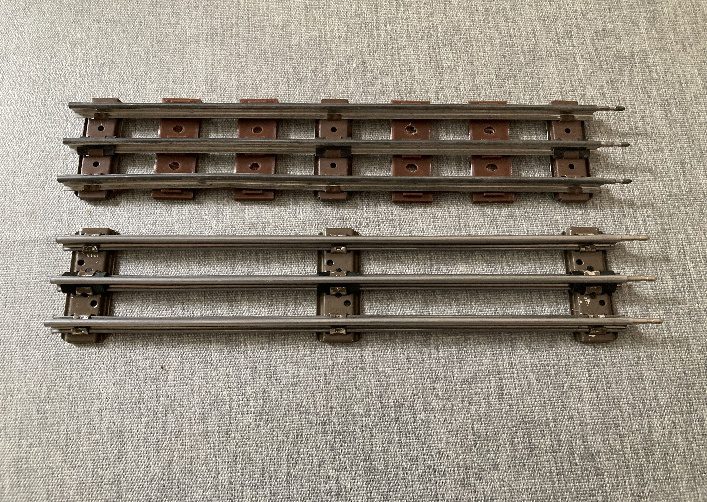
(The plastic lines connecting the 3D ties are used for spacing and do not show when installed.)
To date, there have been over twenty 3D-printed projects I have undertaken. That number is still growing.