How to Display Your Model Trains While Keeping Them Protected
By Johnny Gulo, Fall 2026 e*Train
Editor’s Note: Author Johnny Gulo is affiliated with Display Zone, a retailer of model train display cases. The following article provides general guidance on displaying and protecting model trains.
A favorite model locomotive should be easy to admire! Do you have a childhood keepsake, a recent train show find, or an engine that still makes regular trips around the layout? A thoughtful display lets you enjoy your model trains between operating sessions while helping protect them from dust, sunlight, and unnecessary handling.
Check out these five tips for displaying a single engine or an entire collection.
Protecting Trains from Dust and UV Exposure
Dust can settle around wheels, handrails, and other small details that are difficult to clean. An enclosed display case or cabinet helps reduce buildup, which also reduces how often you need to handle your trains for cleaning.
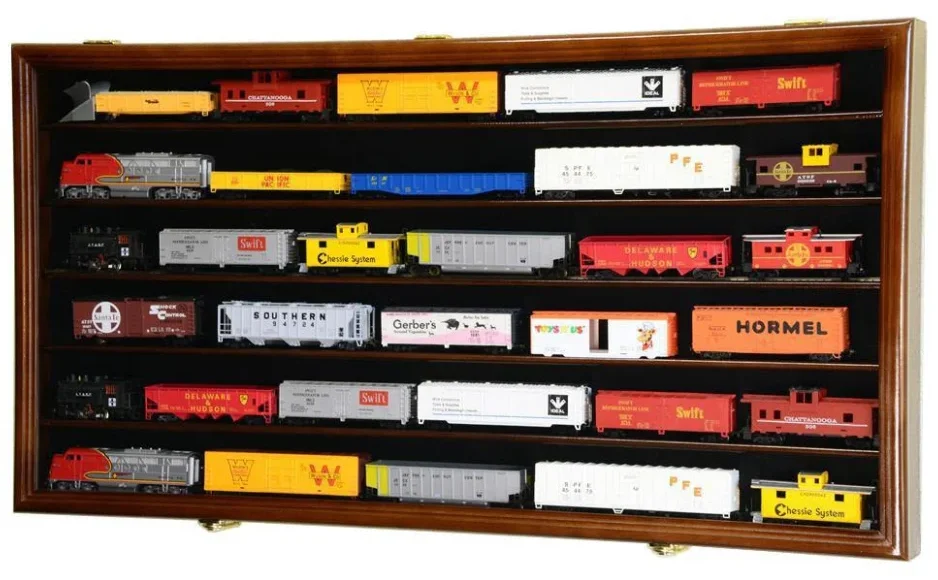
Over time, UV exposure can contribute to fading and deterioration of plastic and rubber components. Where you place your display is just as important as the case. If possible, it’s best to choose a spot away from direct sunlight even if the case offers UV protection.
UV-filtering glass or acrylic helps protect your trains from ultraviolet exposure. Think of UV-protective glass or acrylic as a second layer of protection.
Choosing Appropriate Display Materials
Glass and acrylic can both provide clear views of your trains. Glass generally resists scratching better, while acrylic is lighter and more resistant to breaking from an impact. Both materials work well for displaying model trains, so the choice comes down to your preferences and display setup.
Do not assume that a train model display case provides UV protection. Check the product details of the actual glass or acrylic used in the case, along with its percentage of UV protection. A higher percentage means more UV protection.
Look at the interior materials, too. Shelves, liners, and supports should be suitable for long-term display. Make sure the interior materials will not leave sticky residue or transfer color onto the trains’ finish.
Even when a display case is designed for your type of model train, double-check the fit by comparing your train’s measurements with the case’s interior dimensions. When measuring, include any parts of the train that stick out, such as couplers and handrails, and leave enough room to lift it in and out comfortably.
Safely Displaying Heavier O Gauge Equipment
A shelf that is large enough to hold an O gauge locomotive may not be strong enough to support it. Check the stated weight capacity of each shelf and the complete cabinet before loading your collection.
Include the combined weight of the locomotives, rolling stock, display track, and accessories. Do not rely on appearance alone to judge whether a shelf or mounting system is adequate.
For wall-mounted displays, follow the installation instructions and use mounting hardware appropriate for the wall construction and loaded cabinet. If the instructions or weight limits are unclear, ask the company before installation.
Whether you use a tabletop or wall-mounted display, make sure the surface supporting your trains is level. If you place track inside the display, secure it so it cannot slide and add end stops to prevent trains from rolling off.
Planning for Long-Term Storage and Protection
Trains that are packed away still need occasional attention. Choose an indoor storage area with reasonably stable conditions, away from excessive heat, dampness, and potential water leaks. Keep boxes off the floor where practical.
Inspect the packaging before putting a model away. Original boxes are part of many collections, but their inserts may deteriorate. Foam that is sticky, brittle, or crumbling should not remain against a train. As plastic and foam packaging ages, it can become sticky or crumble, potentially leaving residue on your trains or damaging their finish.
Use suitable packing supports that prevent movement without pressing against delicate details. Follow the model’s instructions for batteries, lubrication, and extended storage preparation.
Collector tip: Label your boxes and snap a photo of what’s inside so you can find your trains easily later. Every so often, take a look inside for moisture or worn packaging to catch any problems early.
Keeping Trains Accessible for Operation
If you regularly run your trains, make access part of the display plan. Choose an opening wide enough to lift each model comfortably, and leave space for your hands around it.
Keep frequently used trains within easy reach so you can lift them in and out comfortably with both hands.
Keep a table or counter nearby so you have somewhere to set your train when taking it out of the display. Lift it carefully with both hands, avoiding pressure on delicate parts such as handrails and couplers.
Before operating a train that has been sitting on display, follow its maintenance instructions. A cabinet helps protect the model between runs, but it does not replace routine inspection and servicing.
With the right setup, your collection can remain visible, protected, and ready for the next operating session.
About the Author
Johnny Gulo is affiliated with Display Zone, a company specializing in display cases for collectibles, including model trains.